
 29 Jan 2026
 5 min read
 Author: Kajal Sharma
Stunning views, pleasant weather, live volcanoes—what do you say about enjoying a combo of this for your next trip abroad? We hope your answer is yes, because we are going to share some of the most beautiful things to do in Jeju Island. From visiting the gorgeous O’sulloc Tea Museum to exploring the unique Dongmun Market, there’s so much to enjoy.
So, without further ado, let’s get right to the details. Oh, and if you plan to visit, don’t forget to contact the leading travel agency, Next Holidays, to get a holiday package of your choice.
Free Things to Do in Jeju Island South Korea
We all love doing free activities, right? Here are some of the top free things to do in Jeju Island South Korea.
1. Wander Around the Base of Seongsan Ilchulbong 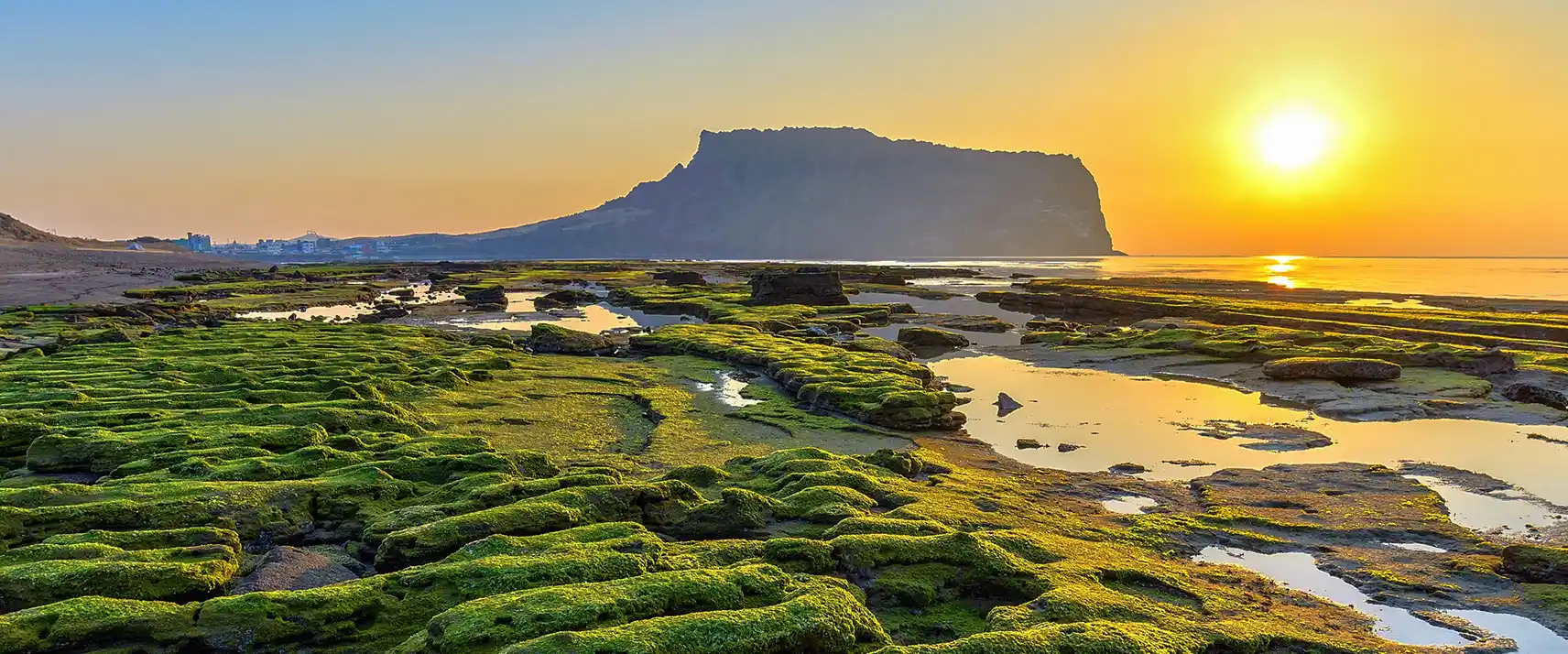
One of the best things to see in Jeju Island is to watch the beautiful views from the summit of Seongsan Ilchulbong. However, since reaching the summit requires you to pay a small entry fee, you can wander around the base, which has free entry. Here, you can still enjoy gorgeous views that you will remember forever.
Enjoy watching the Haenyeo divers as well as mesmerizing coastal views without the hassle of climbing the stairs to the summit crater. In addition to this, you can also take a deep look at volcanic rock formations. We bet that will be fun!
All you gotta do is place Seongsan Ilchulbong somewhere in your itinerary, preferably at a time when the crowds are minimal. Take a walk at the base, click nice photographs, and there you go!
Free Entry for the base | 5,000 KRW for adults for the peak
5 AM to 6 PM | Seongsan Ilchulbong, 78 Seongsan-ri, Seongsan-eup, Seogwipo-si, Jeju-do, South Korea | Seongsan Ilchulbong
2. Visit Jeju Stone Park 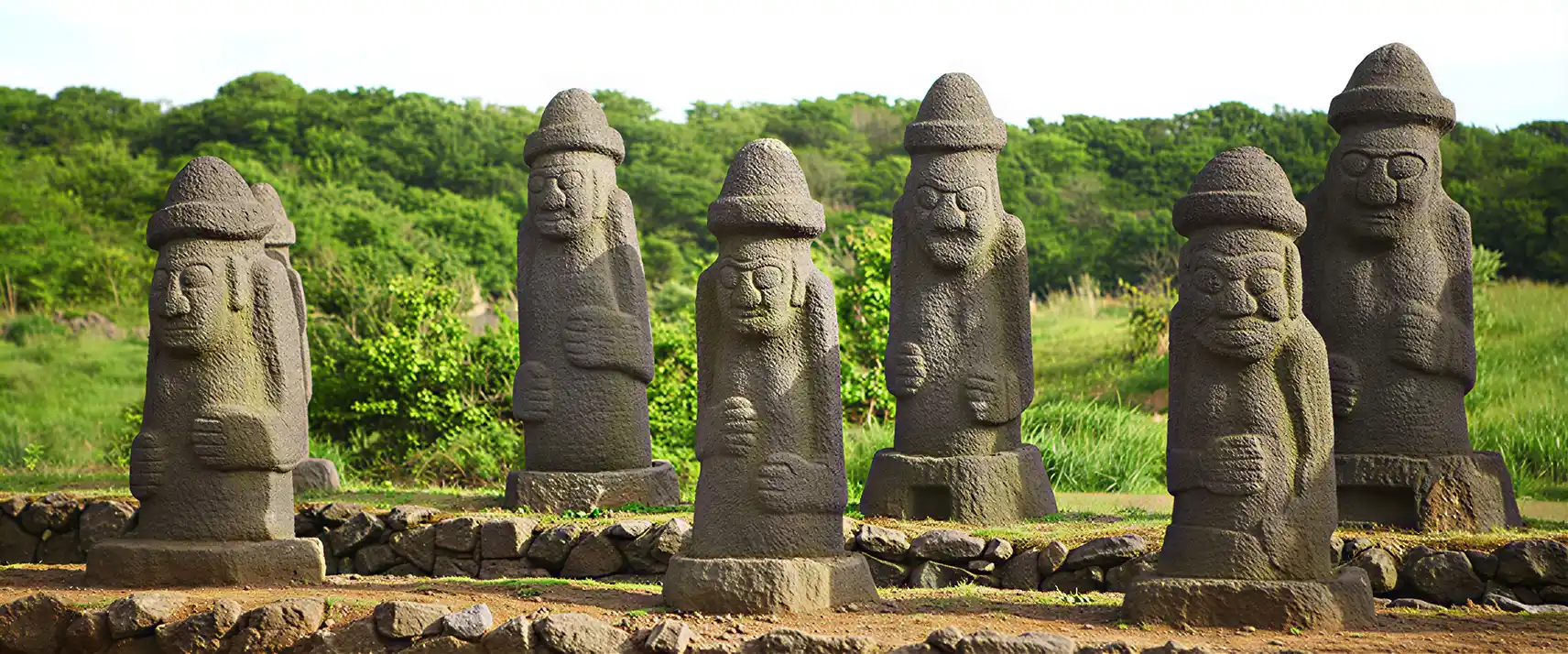
Fun fact: Jeju Island is a result of volcanic activity. Thus, it goes without saying that the rocks and their formations are extremely crucial when it comes to the history and culture of Jeju Island.
Luckily, there’s something called Jeju Stone Park, visiting which is entirely free of charge. Time to learn something about rocks and stones?
One of the top Jeju Island things to see is the Jeju Stone Park, which commemorates the significance of the rocks in one place. And if you’d like to focus more on the geology part, the museum inside should sound lovely to you!
9 AM to 6 PM from Tuesday to Sunday | Closed on Monday | Jeju Stone Park, 2023 Namjo-ro, Jocheon-eup, 특별자치도, Jeju-si, Jeju-do, South Korea | Jeju Stone Park
Book your Seoul Blossom Journey tour package from UAE now!
Nature and Beaches on Jeju Island F
Free or not, there are several things to do in Jeju Korea that involve nature and wildlife. Ready to see what these are?
3. Explore the Famous Waterfalls 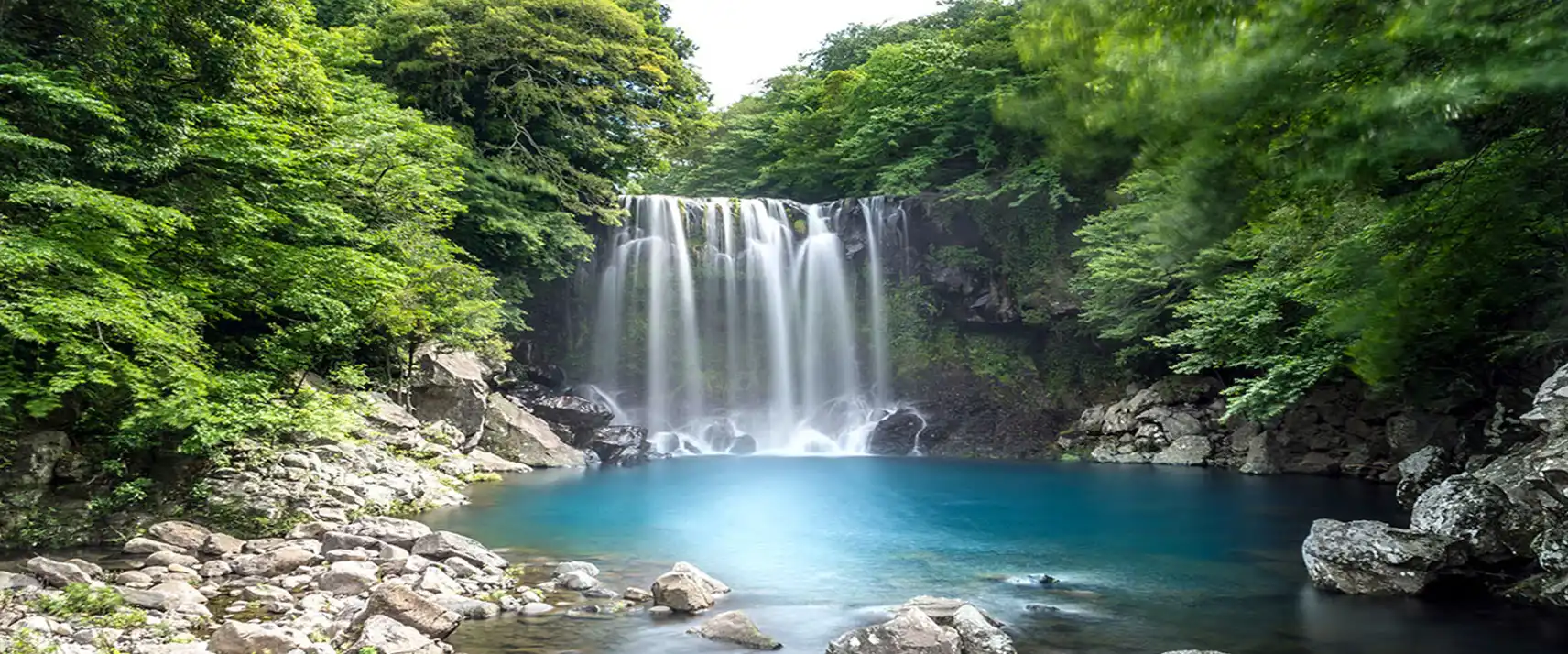
Jeju Island attractions include three beautiful waterfalls that you cannot miss chasing. Jeongbang, Cheonjeyeon, and Cheonjiyeon are all really stunning. Not sure which one to go for? Pick one (or all) according to what you’re looking for.
- Jeongbang Waterfall: If you would like to stand right there next to the waterfall, the Jeongbang Waterfall is the one you must visit. Take a plunge and have the time of your life! Remember, the waterfall is heavily crowded in summer—who doesn’t want a nice swim with a beautiful view!
- Cheonjeyeon Waterfall: One of the best Jeju attractions in terms of places for adventure lovers is the Cheonjeyeon Waterfall. It’s three levels high and requires you to go for a nice hike. Trust us, the struggle is worth it!
- Cheonjiyeon Waterfall: The name is similar, but remember, this is a different waterfall. If you’re interested in just beautiful photographs and not a sweaty hike, this one is for you. Besides, the crowds are low because you cannot take a swim here.
Tip: Do NOT ignore the one-character difference between the Cheonjeyeon and Cheonjiyeon waterfalls. That difference can lead you to a three-level hike wearing sandals and a pretty dress!
- Jeongbang Waterfall: 9 AM to 5:20 PM Daily | 2,000 KRW for adults and 1,000 KRW for children | 37 Chilsimni-ro 214beon-gil, Seogwipo-si, Jeju-do, South Korea | Jeongbang Waterfall
- Cheonjeyeon Waterfall: 9 AM to 5:10 PM Daily | 2,000 KRW for adults | 2232 Jungmun-dong, 특별자치도, Seogwipo-si, Jeju-do, South Korea | Cheonjeyeon Waterfalls
- Cheonjiyeon Waterfall: 9 AM to 10 PM Daily | 2,000 KRW for adults | 132 Cheonjeyeon-ro, Seogwipo-si, Jeju-do, South Korea | Cheonjiyeon Waterfall
4. Chase the King Cherry Blossoms
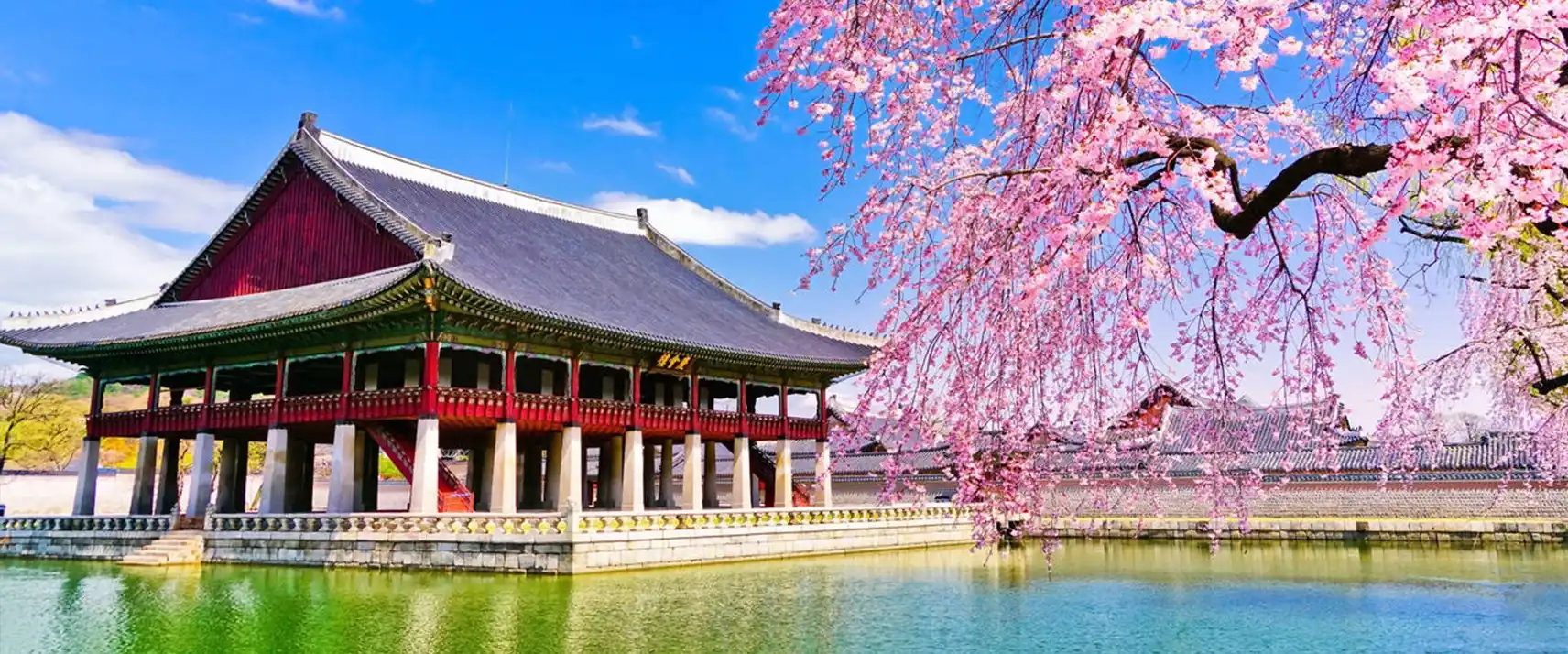
Whether or not you’ve visited Japan, you might already know of cherry blossoms—nature’s beautiful gift. But did you know about the King cherry blossoms? Well, the ones found in Japan are Yoshino and are found across that country.
The King cherry blossoms are original to Korea and can be found on Jeju Island. So, how do you spot them? You go chasing! There are several spots that you must visit to see the cherry blossoms in their full bloom. These include Jeonnong-ro (Jeju City), Hallim Park, Jangjeon-ri, and Noksan-ro.
Honestly, these cherry blossoms at the end of the spring are the most beautiful South Korea Jeju Island attractions. And if you wish to explore both kinds of cherry blossoms, you can even get a Japan with South Korea tour package from UAE.
Recommended: Best Time to Book Cherry Blossom Packages in 2026
Also Read: Best Places to See Cherry Blossoms in Japan
5. Take the Mount Hallasan Challenge 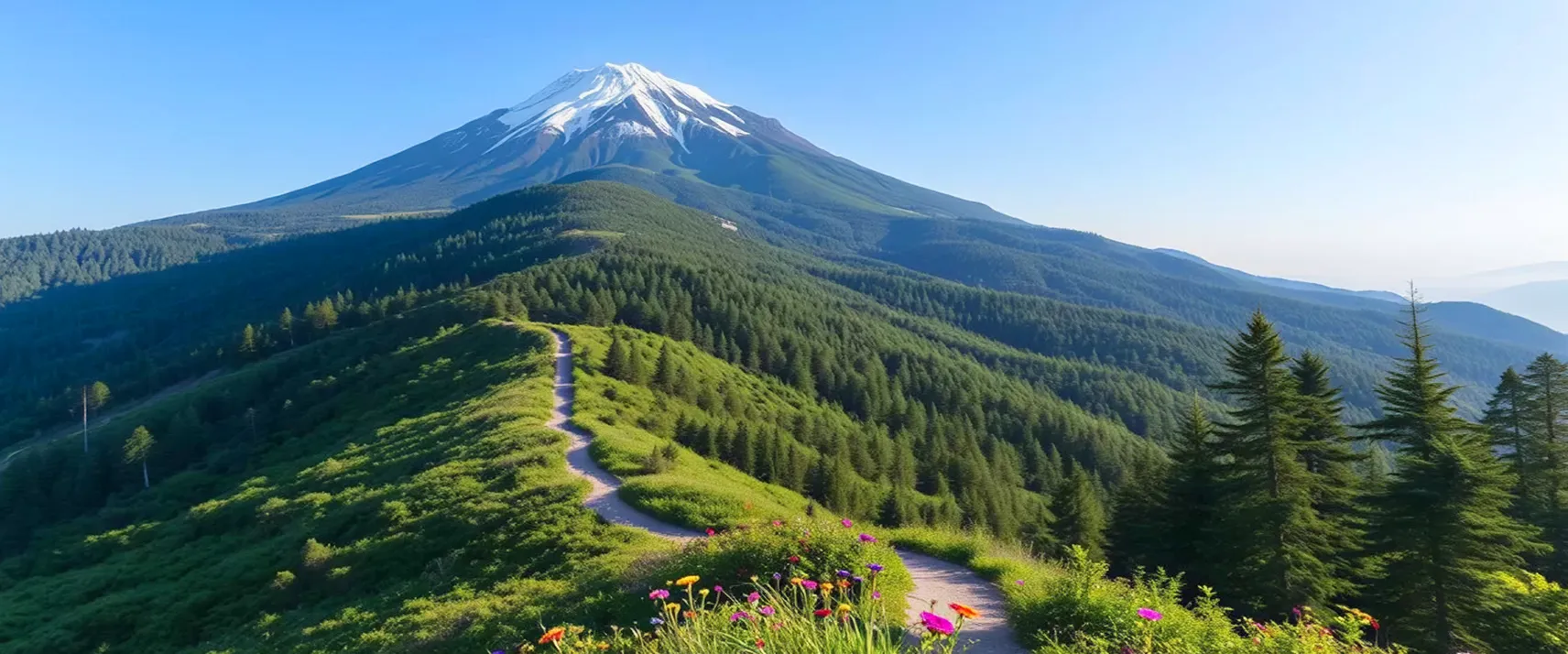
While we’re talking about things to do in Jeju Island Korea related to nature, how can we skip the Mount Hallasan hike? Truth be told, climbing Mount Hallasan is not easy, but the challenge will be worth it.
Take a hike to the summit of Mount Hallasan, which stands at 1,950 meters. Plan your hike early because it’s going to take nearly 7 to 8 hours to reach the peak. If you prefer a shorter trail, it can be roughly 4 to 5 hours long.
The Eoseungsaengak trail is the shortest one, which is just 1.3 kilometers and is at an elevation of over 600 meters. While it is difficult, the views and the feeling of being on top of the clouds will be worth it!
Tip: Don’t forget to hike with proper gear. Whether or not the trail seems difficult to you, carrying hiking gear is a must.
5 AM to 6 PM Daily | Hallasan National Park, South Korea, Jeju-do, Jeju-si, 특별자치도, 1100로 2070-61 | Hallasan National Park
6. Walk the Yongmeori Beach 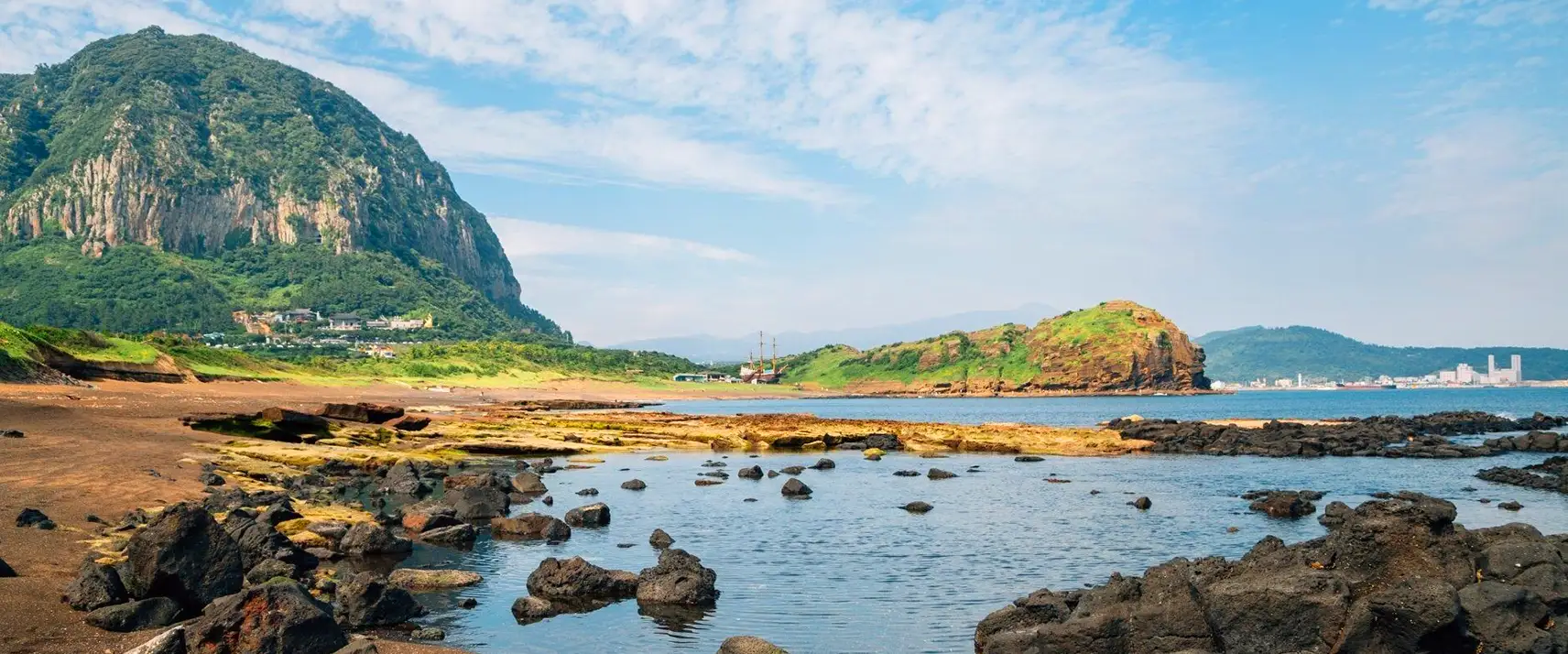
One of the most popular activities in Jeju Island is to enjoy the beach life. You can go for a walk, take a dip, or simply sit and enjoy the alluring coast. And while we’re talking about beaches, what do you think about taking a walk at one of the most beautiful beaches on Jeju Island, the Yongmeori Beach?
When you visit this stunning place, you will get to see magnificent volcanic rock formations in the shape of a dragon’s head and beautiful views that will leave you in awe. All in all, we highly recommend visiting this UNESCO Global Geopark site. Here, you don’t have to wonder Jeju what to see—you just find it!
Tip: Visit on a day when the tide is low, so the beach area is not closed.
9 AM to 5 PM Daily | Yongmeori Beach, 112-3 Sagye-ri, Andeok-myeon, Seogwipo-si, Jeju-do, South Korea | Yongmeori Coast
History and Culture on Jeju Island
Jeju Stone Park is just one aspect of the amazing culture and history that the island has. So, what do you say we learn about some of the best things to do in Jeju South Korea that offer us unique insights into the culture?
7. Explore the O’sulloc Tea Museum 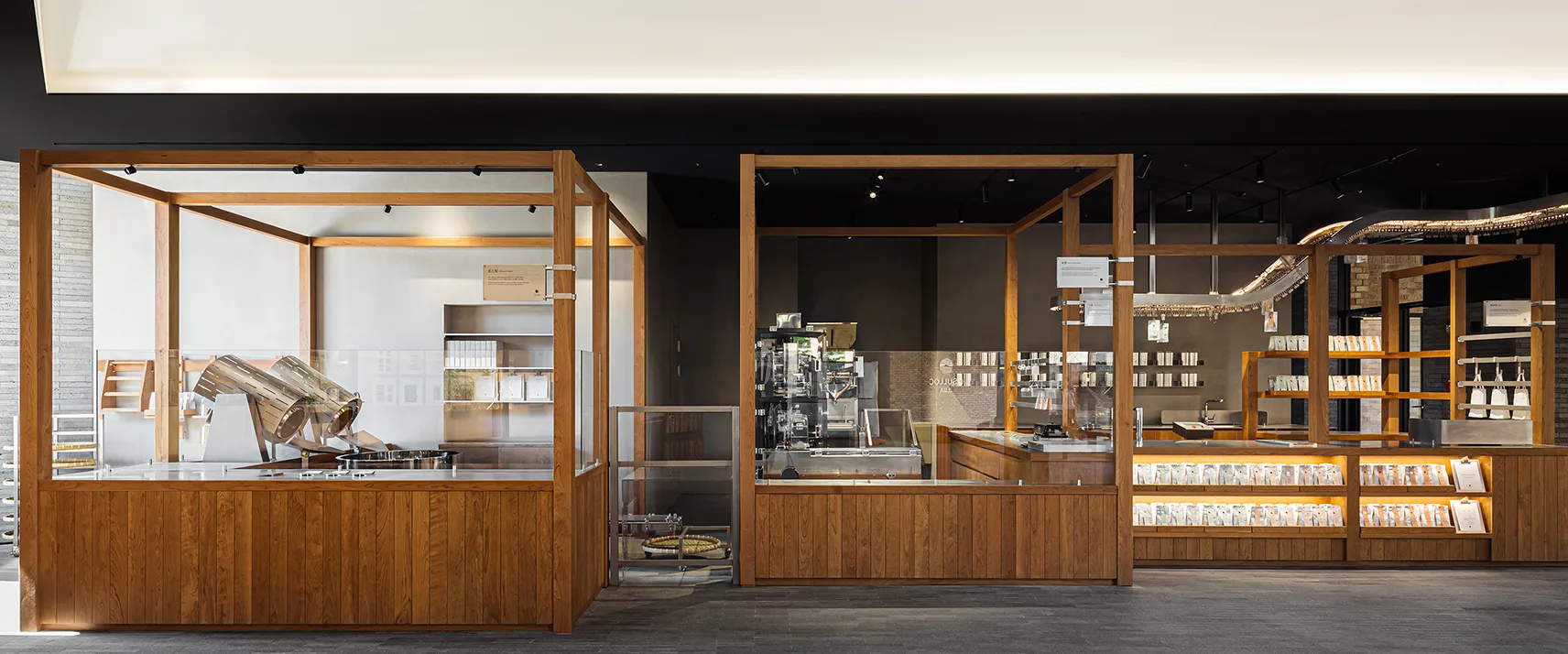
If you didn’t already know, Korean tea is a must-try and a crucial part of the culture of Jeju Island. So, exploring the O’sulloc Tea Museum naturally becomes a must! The lush green tea fields, along with the whole experience, make it one of the perfect things to do in Jeju do.
At the O’sulloc Tea Museum, you can learn about the history of tea and even purchase the fancy teas that they boast. Don’t forget to try green tea ice cream. It might sound weird to you if you haven’t ever heard of it but trust us—you’ll love it!
Wander the fields, click photographs that you can share on your Instagram, and make memories of a lifetime. We’re still not done. There’s the Innisfree House, which is part cafe and part shop. Enjoy a refreshing beverage here and get a souvenir before you finally head out.
9 AM to 6 PM Daily | O’sulloc Tea Museum, 15 Sinhwayeoksa-ro, Andeok-myeon, 특별자치도, Seogwipo-si, Jeju-do, South Korea | Osulloc Tea Museum
Also Read: Korea China discovery tour package from UAE
8. Visit Dongmun Traditional Market 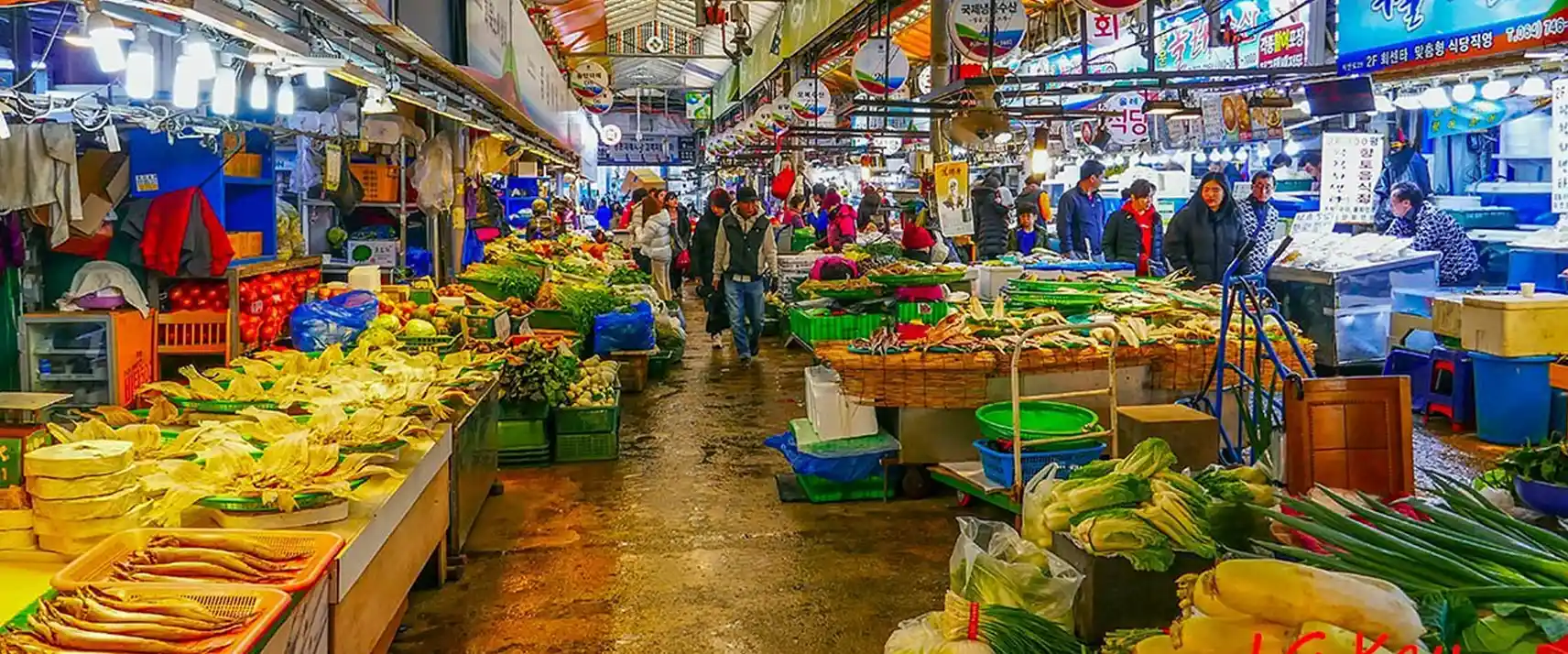
Do you like seafood? If not, you’re going to, because Korea has some really amazing local seafood markets. Besides, it’s not just about the fish market—there are several things you can buy at the most expansive permanent market of Jeju. Here’s what you can purchase:
- Fruits
- Vegetables
- Medicinal herbs
- Clothing
- Grains
Apart from all this, you can find fresh seafood here, including items like sliced raw cutlassfish, and that too, at affordable prices. The innovative dishes make the market one of the top South Jeju attractions.
8 AM to 9 PM Daily | Dongmun Traditional Market, 20 Gwandeok-ro 14-gil, 특별자치도, Jeju-si, Jeju-do, South Korea | Dongmun Traditional Market
9. Experience Hanoks at Seongeup Folk Village 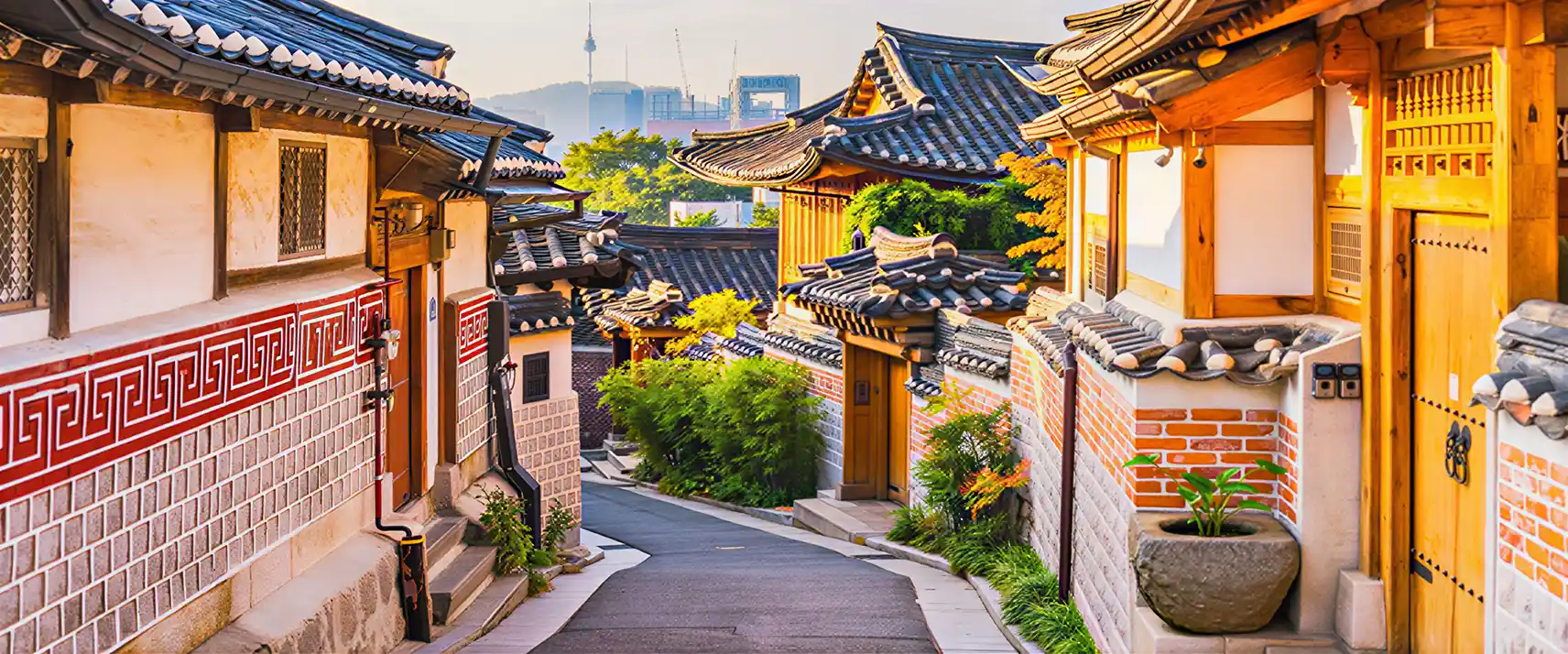
The last one on our list of the best Jeju tourist attractions is the Seongeup Folk Village. When it comes to the top Jeju things to see, seeing the traditional hanoks is a must. And for that, we suggest you visit the Seongeup Folk Village.
Traditional hanoks refer to the Korean houses that are often found in villages. They’re made from natural materials, including stone, earth, and wood, and are a very important part of the country’s history and culture.
When you visit the Seongeup Folk Village on Jeju Island, you will see hanoks made of local basalt stone and thatched roofs. The walls are curved and low and are made of black stone. These help protect the house from the wind.
Tip: Interact with the locals living in these traditional hanoks and ask them more about their homes.
Seongeup Folk Village, 30번지 Seongeupjeonguihyeon-ro, Pyoseon-myeon, Seogwipo-si, Jeju-do, South Korea | Seongeup Folk Village



Comments